
Eigenscape AI helps leadership teams identify, validate, govern, and roadmap AI opportunities before investing in full-scale development.


AI Use-Case Discovery · Enterprise AI Roadmap Design · Responsible AI Governance


Built for enterprise teams across India and the United States
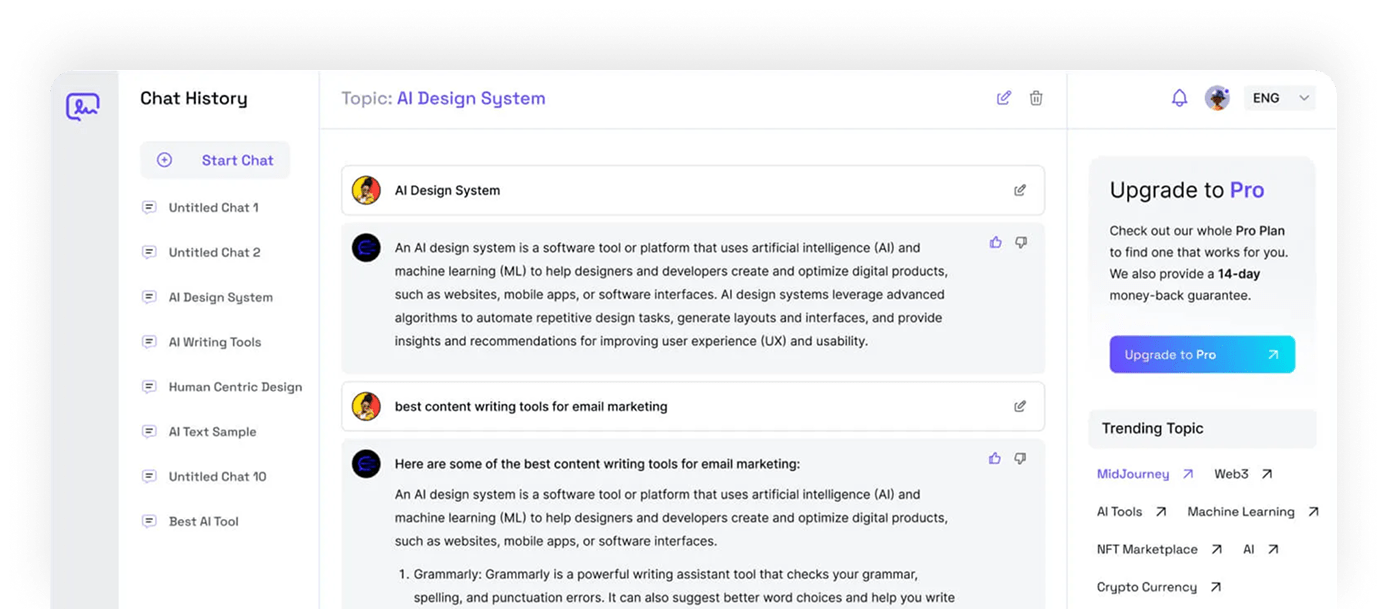

Most AI initiatives do not fail because leaders lack ambition. They stall because use cases, data, ownership, governance, and execution are not clear enough before development begins.


"We know AI can improve demand planning, market intelligence, and field execution. What we do not know is which use case should come first, which one will create measurable value, and which one will only become another experiment."

"Our teams are already using AI across content, support, search, and campaign workflows. The problem is that usage is growing faster than governance, and we need a clear way to separate useful automation from operational risk."

"We cannot treat AI like a generic productivity tool. Every use case has privacy, compliance, data access, and human review implications. We need a roadmap that protects trust while still helping teams move faster."
"There are too many possible AI features, copilots, agents, and automations we could build. The real challenge is deciding what belongs in the product roadmap, what should be internal, and what customers will actually adopt."
"Personalised learning sounds powerful, but we need to know what data is required, how recommendations will be reviewed, and how AI can support learners without replacing academic judgment."
"AI can help with document review, customer communication, lead qualification, and decision support. But before deployment, we need clarity on controls, audit trails, access permissions, and where human approval is mandatory."
"We have manuals, maintenance records, inspection data, safety documents, and process knowledge spread across teams. The question is not whether AI can help. The question is how to connect it safely to real workflows."
"The organisation does not need more disconnected AI pilots. We need a practical roadmap that connects business priorities, data readiness, system integration, governance, and measurable outcomes."

Eigenscape AI is an AI product and services company headquartered in Bengaluru, founded by Jateshwar Mann, helping enterprises across India and the United States identify, validate, govern, and roadmap AI use cases across products, services, marketing, operations, and industry workflows.


Identify the AI opportunities most likely to improve revenue, cost, speed, quality, customer experience, or decision-making.

Separate useful AI opportunities from workflows that need better data, clearer ownership, stronger controls, or human judgment.

Decide whether AI should support a product, internal workflow, customer journey, marketing system, data process, or operational function.

Assess which documents, systems, datasets, knowledge bases, and workflows can safely support AI use today.

Identify privacy, compliance, access, approval, auditability, bias, and human-review requirements before deployment.

Define the roadmap, owners, timelines, success metrics, integration needs, and controls required to scale AI beyond experiments.
Identify which AI opportunities are worth pursuing by testing business value, workflow readiness, data availability, user adoption, and risk.
Prioritise the right use cases before investing.
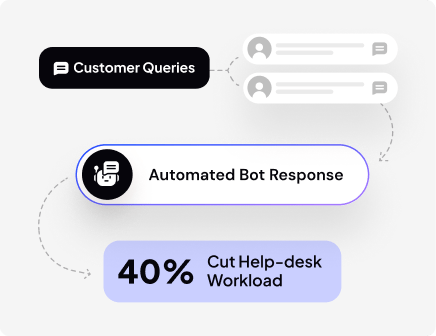
Convert selected AI opportunities into a phased roadmap with owners, timelines, dependencies, integrations, success metrics, and delivery priorities.
Turn AI ambition into an execution plan.

Define the controls needed for privacy, compliance, access, approvals, auditability, human oversight, and responsible AI adoption.
Scale AI with control, trust, and accountability.
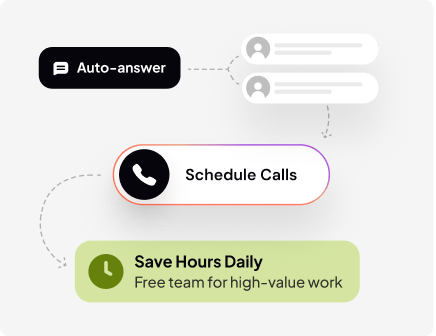
Eigenscape AI evaluates each AI opportunity across business value, workflow clarity, data readiness, risk, integration effort, user adoption, and measurable impact. This helps leadership decide what to build first, what to improve first, and what to avoid for now.


Does the use case improve revenue, cost, speed, quality, customer experience, visibility, or decision-making?
Is the workflow repeatable, well understood, owned by the right team, and clear enough for AI to support?
Are the required documents, datasets, knowledge bases, systems, or historical records accessible and usable?
What privacy, compliance, access, approval, bias, auditability, and human-review controls are required?.
Can the AI system connect with existing CRMs, ERPs, websites, apps, APIs, databases, or internal tools?
Will the people expected to use the AI system trust it, understand it, and fit it into their daily work?
Can success be tracked through clear metrics such as time saved, accuracy, conversion, cost reduction, or response speed?
We check whether the use case is tied to a real business outcome such as revenue growth, cost reduction, faster decisions, improved customer experience, better quality, stronger visibility, or lower operational effort.
We review whether the workflow has clear steps, defined users, known handoffs, repeatable decisions, and an owner who can support adoption after deployment.
We assess whether the required data, documents, knowledge bases, system records, or historical examples are available, usable, accurate, and safe for AI use.
We identify privacy, compliance, security, access control, approval, bias, audit trail, and human-in-the-loop requirements before the use case moves toward development.
We evaluate how easily the AI system can connect with existing tools such as CRMs, ERPs, websites, apps, APIs, databases, cloud systems, or internal platforms.
We check whether the users will understand the AI output, trust the workflow, know when to intervene, and see enough value to use the system consistently.
We define how the use case will be measured, including time saved, accuracy, response speed, cost reduction, conversion improvement, risk reduction, or decision quality.

Enterprise AI is no longer a question of interest. The leadership challenge is deciding which use cases are ready, which risks need governance, and which initiatives can move beyond pilots into measurable business value.
of organisations use AI in at least one business function
McKinsey, 2025
of AI projects unsupported by AI-ready data may be abandoned through 2026
McKinsey, 2025
of GenAI projects may be abandoned after proof of concept by end of 2025
Gartner, 2024
cite data accuracy or bias as a major GenAI adoption challenge
IBM, 2025

Eigenscape AI turns selected AI opportunities into a phased enterprise roadmap with clear owners, timelines, dependencies, governance needs, integration priorities, and measurable outcomes.
The first phase focuses on use cases that are valuable, clear, low-friction, and measurable. These early wins help leadership build confidence, test adoption, and avoid large investments before the organisation is ready.
Find Early AI Wins
The second phase connects validated use cases to the systems, data flows, integrations, and governance layers required for regular business use. This is where AI moves from demonstration to operating capability.
Map Core AI Systems
The third phase turns individual AI initiatives into reusable capability. Teams can build on shared data foundations, model patterns, integration methods, governance rules, and deployment practices instead of starting from zero each time.
Design AI Capability
The final phase defines how AI systems are monitored, reviewed, improved, and governed after deployment. This helps leadership scale AI without losing visibility, compliance alignment, or operational control.
Review AI Governance
Eigenscape AI defines the required governance controls for the use case, including data access, privacy handling, user permissions, human review points, audit logs, approval flows, risk checks, and deployment boundaries.
We identify where human approval is required before AI can respond, recommend, publish, update records, trigger workflows, or support decisions. This is especially important for regulated, customer-facing, financial, healthcare, employee-impacting, or high-risk workflows.
We help define role-based access rules for users, reviewers, admins, technical teams, and leadership. This includes who can view data, approve outputs, edit prompts, manage integrations, access logs, and override AI actions.
We specify what the system should record, including prompts, retrieved sources, user actions, AI outputs, approvals, overrides, data access events, errors, model versions, workflow decisions, and system changes.
We map the data involved in the use case and define handling rules for personal data, health data, financial data, customer records, confidential documents, internal knowledge, retention, masking, encryption, and access restrictions.
We define validation steps such as source grounding, retrieval checks, test cases, output review, confidence thresholds, restricted response rules, escalation paths, red-team testing, and fallback behaviour for uncertain outputs.
We align the governance plan with relevant requirements such as SOC 2 readiness, HIPAA-aware workflows, CCPA-aware privacy, DPDP/GDPR alignment, internal security policies, vendor risk requirements, and industry-specific compliance expectations.
For AI agents that call tools, update systems, trigger workflows, or make multi-step decisions, we define permission levels, action limits, approval checkpoints, rollback options, monitoring rules, escalation paths, and accountability for each automated action.
We define post-launch monitoring for accuracy, latency, adoption, failed responses, user overrides, retrieval quality, misuse patterns, escalation rates, business impact, drift, and recurring failure cases.
Who owns governance after the AI system goes live?
We define restricted actions, blocked data types, prohibited use cases, escalation triggers, approval-only workflows, and decision boundaries so AI does not operate beyond the organisation’s risk appetite.
Clear governance gives teams confidence to test, deploy, and scale AI because they know what is allowed, what needs approval, what must be reviewed, and how risk will be managed before rollout.
Share your AI use case, data type, industry, and deployment goal. Eigenscape AI will help define the controls required before development or rollout.
hello@eigenscape.aiJoin thousands of companies transforming their business with AI
API Calls Daily
Countries Served
Customer Rating
Expert Support
Eigenscape AI helps leadership teams evaluate AI use cases, roadmap adoption, and define governance controls based on the way each industry operates, scales, and manages risk.

Prioritise AI use cases across demand planning, market intelligence, field execution, consumer insights, campaign performance, and category growth.
Prioritise Demand Planning AI Prioritise Demand Planning AI
Evaluate AI opportunities across product discovery, search, pricing, support, fulfilment, personalisation, conversion, and retention workflows.
Improve Product Discovery Improve Product Discovery
Define AI roadmaps for patient engagement, clinical support, medical content, document intelligence, compliance-aware workflows, and human-reviewed decision support.
Plan Patient Support AI Plan Patient Support AI
Decide which AI copilots, agents, product features, support systems, lead workflows, and internal automations belong in the product or operating roadmap
Roadmap AI Product Features Roadmap AI Product Features
Assess AI use cases for personalised learning, learner support, content generation, assessment assistance, academic operations, and student engagement.
Personalise Learning AI Personalise Learning AI
Plan AI adoption across document review, customer communication, risk support, lead qualification, compliance workflows, advisory support, and audit-ready operations.
Govern Document Review AI Govern Document Review AI
Identify AI opportunities across maintenance, inspection, quality control, safety documentation, process knowledge, inventory, operations, and industrial decision support.
Prioritise Predictive Maintenance Prioritise Predictive Maintenance
Evaluate AI use cases for project tracking, asset documentation, customer enquiries, sales
Map Project Intelligence AI Map Project Intelligence AIEigenscape AI connects strategy to the right execution path, so validated use cases can move into engineering, automation, integration, data, or growth systems.
Turn validated use cases into RAG pipelines, private LLM deployments, fine-tuned models, document intelligence, and enterprise copilots.
Explore LLM Pathway
Design AI agents that can follow workflows, call tools, coordinate tasks, support teams, and operate with approval controls.
Explore Agentic Pathway
Connect models to data pipelines, monitoring, deployment environments, dashboards, drift checks, and measurable performance tracking.
Explore MLOps Pathway
Integrate AI with CRMs, ERPs, websites, apps, APIs, knowledge bases, cloud systems, and internal workflows.
Explore Integration Pathway
Apply AI to SEO, GEO, lead generation, performance marketing, content systems, website journeys, and buyer intelligence.
Explore Marketing Pathway
Use strategy workshop, leadership discussion, workflow mapping, or AI opportunity visual


A clear view of where AI can support revenue, cost, speed, quality, customer experience, operations, or decision-making.
A prioritised scorecard ranking AI opportunities by value, data readiness, workflow fit, risk, effort, and adoption potential.
A practical review of data, systems, workflows, users, ownership, and governance needs before development begins.
A leadership-ready recommendation on what to build first, what to improve first, and what should wait.
Use roadmap, enterprise planning, system architecture, or transformation visual
A structured plan showing short-term wins, core systems, platform capability, governance needs, and scale priorities.
A clear sequence of initiatives based on business value, dependency, complexity, readiness, and expected impact.
Defined owners, teams, milestones, review points, and timelines for moving selected use cases toward production.
Metrics to track success across adoption, accuracy, speed, cost reduction, conversion, risk reduction, or decision quality.
Use security, compliance, review, audit, access control, or responsible AI visual
A use-case-level checklist covering privacy, access, approvals, auditability, human review, monitoring, and accountability.
A structured view of possible risks, including data exposure, bias, hallucination, misuse, compliance gaps, and operational failure.
Defined controls for role-based access, approval workflows, escalation paths, logging, restricted actions, and review ownership.
Practical rules for acceptable use, human oversight, data handling, model behaviour, monitoring, and post-launch improvement.
Whether you need architecture guidance, end-to-end delivery, team augmentation, or joint innovation — four engagement models designed for enterprise AI.

Strategic Guidance

End-to-End Build
Team Augmentation
Joint Innovation

Eigenscape AI builds its own AI platforms, so strategy is shaped by what can actually be designed, tested, deployed, and improved in production.

Roadmaps are not left as documents. Each recommendation can connect to LLM engineering, agentic AI, RAG, copilots, MLOps, data engineering, enterprise integration, or AI marketing systems.

Privacy, access control, human review, auditability, compliance alignment, model risk, and responsible AI controls are considered before development begins.

AI opportunities are evaluated around the realities of each industry, including data availability, workflow complexity, adoption barriers, regulatory exposure, and measurable business value.

Headquartered in Bengaluru, Eigenscape AI supports enterprises operating across India and the United States, with strategy shaped around market, workflow, and buyer-context differences.
Every strategy engagement is designed to reduce wasted pilots and move validated use cases toward clear ownership, integration readiness, monitoring, adoption, and measurable outcomes.
AI Strategy & Consulting helps organisations identify the right AI use cases, validate business value, assess data and workflow readiness, design an enterprise AI roadmap, and define governance controls before development begins.
Eigenscape AI provides AI Use-Case Discovery & Validation, Enterprise AI Roadmap Design, and AI Governance & Responsible AI planning for enterprises exploring practical, production-ready AI adoption.
AI Strategy & Consulting is useful for CEOs, founders, CIOs, CTOs, CDOs, product leaders, transformation heads, marketing leaders, and operations teams that need clarity before investing in AI development, automation, copilots, agents, or AI-enabled products.
The right AI use case should have clear business value, a repeatable workflow, available data, defined users, manageable risk, integration feasibility, adoption potential, and measurable outcomes.
AI Use-Case Discovery & Validation is the process of identifying possible AI opportunities and scoring them by business value, data readiness, workflow clarity, risk, implementation effort, user adoption, and measurable impact.
An enterprise AI roadmap is a phased plan that shows which AI initiatives should be built first, what systems and data they depend on, who owns them, what governance controls are required, and how success will be measured.
An AI roadmap should include prioritised use cases, short-term wins, core systems, platform capabilities, owners, timelines, dependencies, data requirements, integration needs, governance controls, success metrics, and review milestones.
Responsible AI governance defines how AI systems are approved, monitored, reviewed, secured, and improved. It covers privacy, access control, auditability, human oversight, risk review, compliance alignment, and accountability.
AI governance is important before development because it helps prevent data exposure, incorrect outputs, unmanaged automation, compliance gaps, unclear accountability, and AI systems that operate beyond business or regulatory limits.
Yes. Eigenscape AI can assess available data, identify gaps, define readiness requirements, and recommend AI use cases that fit the organisation’s current data maturity. Clean data helps, but strategy can begin before full data transformation.
AI Strategy & Consulting defines what should be built, why it matters, how it should be governed, and how it can move toward production. Eigenscape AI can also connect the strategy to execution through LLM engineering, agentic AI, RAG systems, copilots, MLOps, data engineering, enterprise integration, and AI marketing systems.
The timeline depends on the number of business units, use cases, data sources, stakeholders, systems, and governance requirements. A focused AI use-case discovery engagement can be shorter, while a full enterprise AI roadmap requires deeper assessment and planning.
AI Strategy & Consulting is relevant for FMCG, quick commerce, e-commerce, healthcare, pharma, SaaS, enterprise technology, education, EdTech, financial services, BFSI, manufacturing, industrial, real estate, infrastructure, professional services, and public sector organisations.
Yes. Eigenscape AI is headquartered in Bengaluru and works with enterprises across India and the United States on AI products, AI technology services, AI marketing systems, and AI strategy consulting.
Eigenscape AI supports companies operating across India and the United States by designing AI strategies that consider market context, enterprise workflows, buyer behaviour, compliance expectations, system integration needs, and production readiness.
AI consulting decides what should be built, why it should be built, how it should be prioritised, and what controls are needed. AI development builds the system, model, agent, copilot, integration, dashboard, or workflow after the strategy is clear.
The first step is to identify the business goals, workflows, data sources, systems, users, risks, and expected outcomes. From there, Eigenscape AI can evaluate use cases and recommend the right roadmap.
